
If you’ve been hiding your smile because your upper front teeth cover too much of your lower ones, you’re not alone. A deep overbite is one of the most common bite issues people deal with. And if you’re looking into Invisalign in Columbia, SC, you’ve probably asked yourself if it will actually work for you.
Invisalign can fix many overbites. But how well it works depends on the severity of your case and the results you’re expecting.
What Is a Normal Overbite vs. a Problematic One?
In a healthy bite, your upper front teeth should overlap your lower teeth by about one-third to one-half of their visible height. That’s considered normal and usually doesn’t need treatment.
When that overlap goes beyond what’s ideal, Columbia dentists call it a deep bite or excessive overbite. This isn’t just about looks. A deep bite can cause uneven tooth wear, jaw pain, and even make it harder to keep your teeth clean.
If you’re in that category where the overbite is causing problems, Invisalign might be a good option for you.
What Invisalign Can Actually Do
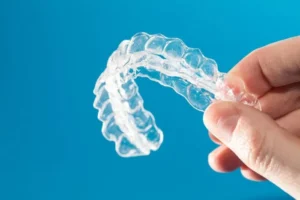
Invisalign can correct an overbite or deep bite by gradually moving your teeth. Treatment time typically runs 12 to 24 months, depending on the complexity of your case. The aligners apply controlled pressure to shift teeth into better positions, including intruding (pushing up) the upper front teeth and extruding (pulling up) the back teeth to open up the bite.
For mild to moderate overbites, patients generally see good results. One comparative study found that Invisalign was slightly more effective than traditional braces in correcting deep overbites in certain cases. That’s worth paying attention to.
Invisalign has also introduced features like mandibular advancement appliances and precision wings that can gradually move the lower jaw forward, a great tool for teens with more significant bite issues.
Where Invisalign Falls Short
Research shows that in many cases, Invisalign doesn’t achieve the full extent of overbite correction originally planned.
One study of deep bite cases found that patients achieved only about 28-55% of the planned overbite reduction. Another large database study tracking Invisalign patients found that central incisor roots moved more labially (toward the lip) than planned, which carries a potential risk of pushing roots outside the bone housing.
In other words, Invisalign sometimes struggles to fully deliver on what the digital plan promises, especially when it comes to the vertical movements required for deep overbite correction.
Severe cases, where the overbite exceeds 6 millimeters, become even more challenging. For those patients, many orthodontists recommend traditional braces because they offer more precise control over tooth movement.
How to Tell
Dr. Tom Trinkner takes a conservative approach to every treatment plan. That’s the foundation of the practice. When it comes to Invisalign and overbites, the approach is the same: an honest assessment, realistic expectations, and a recommendation of what’s truly best for your long-term health.
If your overbite is mild to moderate, Invisalign is absolutely worth considering. You could get the benefits of a discreet, removable option that lets you eat what you want and brush normally.
If your overbite is severe, traditional braces might still be the better option. That’s not a failure of Invisalign because it’s more about using the right tool for the right job. After a consultation, your dentist in Columbia, SC, will be able to tell you which is better for your needs.
Improve Your Bite Today
The only way to know for sure is to come in for a consultation. Dr. Trinkner uses a digital scanner to create a precise 3D model of your teeth and can show you a virtual preview of what’s possible. That’s the kind of transparency that helps you make a confident decision.
Ready to find out if Invisalign can fix your overbite? Call Dr. Trinkner’s office at 803-400-8729 today or request an appointment online anytime.