
If you are missing one or more teeth, a dental bridge can restore your smile, improve your ability to chew, and prevent your remaining teeth from shifting out of place.
Dr. Thomas Trinkner was the first dentist in South Carolina to become an Accredited Member of the American Academy of Cosmetic Dentistry (AACD). He offers custom-crafted dental bridges that look natural, fit comfortably, and last. With nearly 40 years of experience, he has helped thousands of Columbia patients regain complete, confident smiles.
We proudly serve patients from Columbia, West Columbia, St. Andrews, Seven Oaks, Oak Grove, and all across the Midlands.
What Is a Dental Bridge?
A dental bridge closes the gap created by one or more missing teeth. The bridge consists of one or more false teeth (called pontics) that are held in place by dental crowns on the teeth adjacent to the gap.
Bridges restore:
- Your ability to chew and speak properly
- The natural shape of your face (preventing that “sunken” look)
- The alignment of your remaining teeth (preventing them from drifting into the gap)

Types of Dental Bridges
Not all bridges are the same. Dr. Trinkner will help you choose the type that best fits your situation.
Traditional Dental Bridge
This is the most common type of bridge. It consists of one or more false teeth held in place by dental crowns on the teeth on either side of the gap. Traditional bridges are ideal when you have healthy, natural teeth adjacent to the missing tooth.
Cantilever Dental Bridge
A cantilever bridge is used when there is only one natural tooth next to the gap. The bridge is anchored to that single tooth. This type is less common and is typically used for teeth that don’t bear heavy chewing forces, such as front teeth.
Maryland (Resin-Bonded) Dental Bridge
This bridge uses a metal or porcelain framework bonded to the back of the adjacent teeth instead of crowns. Maryland bridges are less invasive because they don’t require reshaping the adjacent teeth. However, they aren’t as strong as traditional bridges and are typically used for front teeth.
Implant-Supported Dental Bridge
Instead of being anchored to natural teeth, an implant-supported bridge is anchored to dental implants placed in the jawbone. This option does not require any preparation of healthy adjacent teeth and provides excellent stability.
Patient Review
Dental Bridge vs. Dental Implants: Which Is Right for You?
If you are missing teeth, you may be wondering whether a bridge or an implant is the better option. Here is how they compare.
Dental Bridges:
- How it works: Anchored to adjacent natural teeth
- Affects healthy teeth: Yes (adjacent teeth are ground down for crowns)
- Preserves jawbone: No (bone loss continues under the missing tooth)
- Lifespan: 5-15 years
- Upfront cost: Lower
- Procedure time: 2-3 weeks
Dental Implants:
- How it works: Stands alone with a titanium post in the jawbone
- Affects healthy teeth: No
- Preserves jawbone: Yes (stimulates bone growth)
- Lifespan: 20+ years (often a lifetime)
- Upfront cost: Higher
- Procedure time: 3-6 months (including healing)
Which should you choose? If your adjacent teeth are already crowned or damaged, a bridge may be a good option. If you want to preserve your healthy teeth and prevent bone loss, an implant is often the better long-term investment. Dr. Trinkner will help you make the right choice for your unique situation.
Dental Bridge Case Study
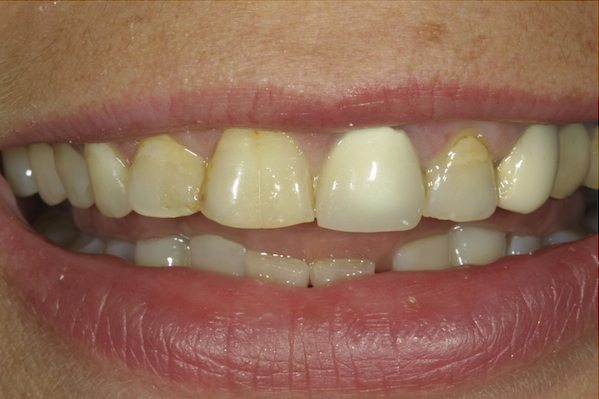
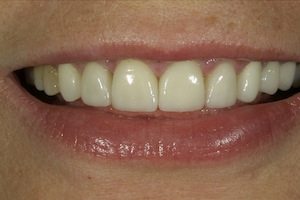
Tulay came to Dr. Trinkner with concerns about her smile. She had a dental bridge and crown on the top left that needed to be replaced, and she wanted to improve the color of her teeth. Due to the complexity of her bite, crowding, and spacing, Dr. Trinkner first utilized orthodontics for approximately 2 years. Next, Dr. Trinkner restored her teeth with porcelain veneers, a porcelain bridge, and bleaching. She was extremely pleased with the final result.
The Dental Bridge Procedure: What to Expect
Getting a dental bridge typically takes two to three visits over several weeks.
First Visit: Examination and Tooth Preparation
Dr. Trinkner will examine the area and take X-rays to check the health of the adjacent teeth and surrounding bone. He will then numb the area and reshape the teeth on either side of the gap to prepare them for crowns. This involves removing a small amount of enamel to make room for the crowns.
Next, he will take precise impressions of your teeth. These impressions are sent to a dental lab where skilled technicians will craft your custom bridge. While you wait (typically 2-3 weeks), you will receive a temporary bridge to protect your teeth and maintain your smile.
Second Visit: Bridge Placement
Once your permanent bridge is ready, you will return to our Columbia office. Dr. Trinkner will remove the temporary bridge and check the fit, color, and bite of your new permanent bridge. He will make any necessary adjustments to ensure it is comfortable and natural-looking.
When everything is perfect, he will permanently cement the bridge in place. You will leave with a complete, functional smile.
Follow-Up Visit (if needed)
You may return for a short follow-up appointment to ensure your bridge is settling properly and your bite is comfortable. Most patients need little to no adjustment after the initial placement.
How Long Do Dental Bridges Last?
With proper care, a dental bridge can last 5 to 15 years. Some bridges last even longer. The lifespan depends on:
- Your oral hygiene habits: brushing, flossing, and regular dental visits
- The location of the bridge: bridges in the back of the mouth endure more chewing force
- Whether you grind or clench your teeth: A night guard can protect your bridge
- The material used: porcelain, metal, or a combination
To extend the life of your bridge, brush twice daily, floss under and around the bridge (special floss threaders help), and visit Dr. Trinkner for regular checkups.
How Much Do Dental Bridges Cost in Columbia, SC?
The cost of a dental bridge depends on several factors: the number of missing teeth being replaced, the type of bridge (traditional, cantilever, Maryland, or implant-supported), the materials used (porcelain, metal, or combination), and whether you need additional procedures like crowns on adjacent teeth.
Estimated price ranges (before insurance):
- Traditional Bridge (3-unit, replacing one tooth): 2,000−5,000
- Traditional Bridge (4-unit, replacing two teeth): 3,000−7,000
- Implant-Supported Bridge (3-unit): 5,000−12,000
NOTE: These are estimates. We will provide a precise, written treatment plan during your consultation.
Financing and Insurance:
- We accept most dental insurance plans and will file claims on your behalf
- Many plans cover a portion of bridge costs (typically 50% after deductible)
- Flexible payment plans available
- CareCredit financing for qualified patients
Why Choose Dr. Trinkner for Your Dental Bridge?
- First AACD Accredited Dentist in South Carolina. Fewer than 400 dentists worldwide have achieved this distinction, which requires demonstrating exceptional skill in cosmetic and restorative dentistry.
- Nearly 40 Years of Experience. Dr. Trinkner has been serving Columbia patients since 1985, with thousands of successful bridges and restorations.
- Conservative Philosophy. Dr. Trinkner believes in doing the least dentistry necessary to achieve healthy, stable results. You will never feel pressured into unnecessary treatment.
- Natural-Looking Results. As an AACD-accredited dentist, Dr. Trinkner has an artist’s eye for color, shape, and symmetry. Your bridge will blend seamlessly with your natural teeth.
- Collaborative Care Model. For complex cases, Dr. Trinkner works with a select team of specialists to ensure the best possible outcome.
Frequently Asked Questions About Dental Bridges
How are dental bridges attached?
A dental bridge is attached by placing dental crowns on the teeth adjacent to the gap. The crowns are cemented onto the prepared natural teeth, and the false tooth (pontic) is fused between them. The entire bridge is cemented in place as one unit.
Can dental bridges damage your teeth?
The teeth adjacent to the gap must be reshaped (enamel removed) to accommodate crowns. This is permanent. However, with proper care, a well-made bridge should not damage your teeth. The risk comes from decay under the crowns, which is why diligent flossing is essential.
What happens if a bridge fails?
If a bridge becomes loose or a tooth under the bridge develops decay, Dr. Trinkner will evaluate the situation. In some cases, the bridge can be re-cemented. In others, a new bridge may be needed.
Can a bridge be whitened?
No. Porcelain and ceramic bridges don’t respond to whitening treatments. If you plan to whiten your teeth, do so before your bridge is made so the bridge can be color-matched to your desired shade.
Are there alternatives to a dental bridge?
Yes. Alternatives include:
- Dental implant: A permanent, stand-alone tooth replacement that does not affect adjacent teeth
- Removable partial denture: A less expensive, removable option
- Do nothing: Not recommended, as remaining teeth will shift, and bone loss will occur
Dr. Trinkner will explain all your options and help you choose the best one for your needs.
Schedule Your Dental Bridge Consultation Today
Dr. Trinkner offers affordable dental bridges in Columbia, SC. If you are missing one or more teeth, you have several options at your Columbia dental practice. Contact Dr. Thomas Trinkner to see if a dental bridge is right for you.
Call 803-400-8729 or schedule a dental exam online today.